
How to Stay Fit With a Full-Time Job
Trying to stay healthy while working full-time can feel almost impossible sometimes.
A lot of people are mentally exhausted before they even think about working out. Between long workdays, stress, responsibilities at home, family life, school, and constant distractions, it becomes very easy to push health to the side.
I understand that personally.
Between project management, military responsibilities, school, marriage, and raising a young child, there are plenty of days where I feel mentally drained before the day is even over. For me, the hardest part of staying healthy has never really been motivation. It’s been mental fatigue, lack of time, and trying to balance everything at once.
There are days where I sit in my truck after work in complete silence because my brain feels overloaded from making difficult decisions and constantly putting out fires all day. Some days I feel so mentally exhausted that it almost feels hard to process simple things.
On those days, all I want to do is go home, sit on the couch, and completely shut down.
And honestly, sometimes I do.
But most of the time, I still force myself to go train.
Not because I always feel motivated, but because I know how much better I’ll feel afterward.
“It is exercise alone that supports the spirits, and keeps the mind in vigor.”
— Marcus Tullius Cicero
Exhaust the Body, Ease the Mind
One phrase I always come back to is:
“Exhaust the body, ease the mind.”
No matter how mentally drained I get, pushing myself physically almost always helps me reset mentally.
For me, that usually means:
- lifting heavy,
- intense cardio,
- pushing through physical discomfort,
- or challenging myself physically in some way.
I’ve realized that physically exhausting myself helps calm anxiety, clear my head, and reduce stress much better than sitting around replaying problems in my mind.
Ironically, the days where I least feel like training are often the days I need it the most.
There have been plenty of times where I gave in to the temptation of going home and doing absolutely nothing after stressful days. Whenever I do that, I usually notice the same thing:
my mental state is worse the next day.
But when I push myself physically instead, I usually bounce back more focused, calmer, and mentally stronger afterward.
Fitness became much bigger than just appearance for me.
It became a form of stress management.
Most People Overcomplicate Fitness
I think one of the biggest mistakes people make with fitness is expecting dramatic results too quickly.
A lot of people try to completely change their lives overnight. They create extreme workout plans, unrealistic diets, and impossible schedules that do not fit into real life.
That usually leads to inconsistency.
In my opinion, consistency will always matter more than perfection.
One bad meal will not ruin your progress.
Missing one workout will not destroy your goals.
One stressful day does not erase your progress.
The real problem starts when one bad day turns into several bad days in a row and people try to “catch up” afterward by doing something extreme.
That cycle burns people out mentally.
Real progress usually comes from staying consistent even when things are not perfect.
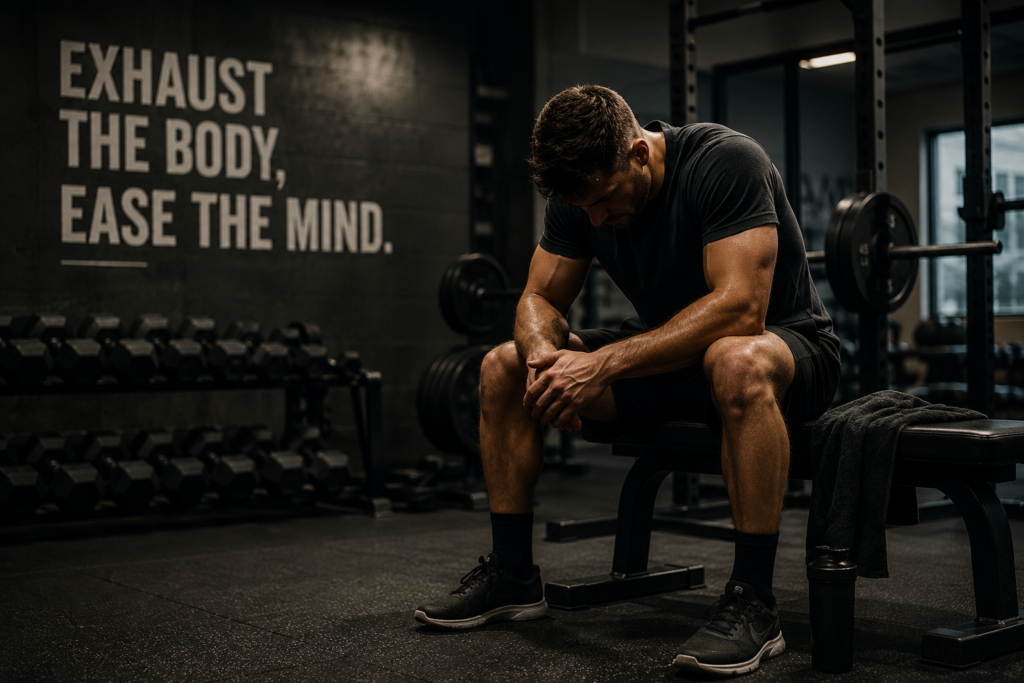
Physical exhaustion often relieves mental exhaustion far better than sitting with stress all night.
Sleep and Nutrition Matter More Than People Realize
Over time, I’ve also realized that sleep and nutrition matter far more than most people think.
You can train as hard as you want, but without proper sleep and nutrition, it eventually catches up to you.
As my schedule became busier over the years, I naturally adapted shorter workouts because I simply did not have unlimited time anymore. What I started noticing was that recovery, sleep quality, and nutrition often impacted my overall health and appearance more than trying to train harder every single day.
Quality sleep became a priority for me.
A lot of people sacrifice sleep constantly while chasing productivity, but eventually that lack of recovery affects:
- stress,
- focus,
- energy,
- mood,
- workout performance,
- and overall health.
The older I get, the more I realize that recovery is not weakness.
It is part of staying healthy long term.
Discipline Creates Structure
One thing that helps me personally is creating simple structure.
I try not to rely completely on motivation because motivation changes constantly depending on stress, energy levels, and life circumstances.
Discipline creates consistency.
Small habits repeated daily usually matter much more than huge bursts of motivation.
A big part of staying consistent long term is understanding why discipline matters more than temporary motivation. If you want to dive deeper into that mindset, check out our article on why discipline beats motivation.
One example for me is fasting.
Most days I fast from around 7 PM until noon the next day. I genuinely love food, and if I’m not careful, I can easily overeat or snack constantly throughout the day. Fasting helps create structure and self-control for me personally.
What I’ve noticed is that the habit itself matters mentally just as much as physically.
There are plenty of times where I want to eat outside my fasting window, especially during stressful days or late at night. But staying disciplined with it reminds me daily that I’m capable of controlling impulses and sticking to commitments I make to myself.
That mindset eventually carries over into other areas of life too.
Balance Matters
I also think people misunderstand health as constantly grinding with no balance.
I push myself hard, but I also believe mental health, family, friendships, and recovery matter a lot.
No matter how stressful life gets, I still try to make time for the people and things I care about. Sometimes that means putting technology away for a while, spending time with family, or simply forcing myself to step away mentally and reset.
The phrase “work hard, play harder” honestly stays in the back of my mind a lot.
I think people become much healthier mentally when they stop viewing wellness as punishment and start viewing it as long-term self-respect.
Sometimes discipline means pushing harder.
Sometimes discipline means recovering properly too.
Final Thoughts
A lot of people believe they are “too busy” to focus on their health.
I understand that feeling completely.
Modern life is mentally exhausting, and balancing responsibilities is not easy. But I’ve learned that taking care of yourself physically often helps you handle everything else in life much better mentally.
You do not need perfect routines.
You do not need hours in the gym every day.
You do not need to completely change your life overnight.
You just need consistency.
Small habits repeated over time create real lasting results.
And sometimes the days where you least feel like taking care of yourself are the days where you need it the most.
Pace your purpose. Drive your future.