
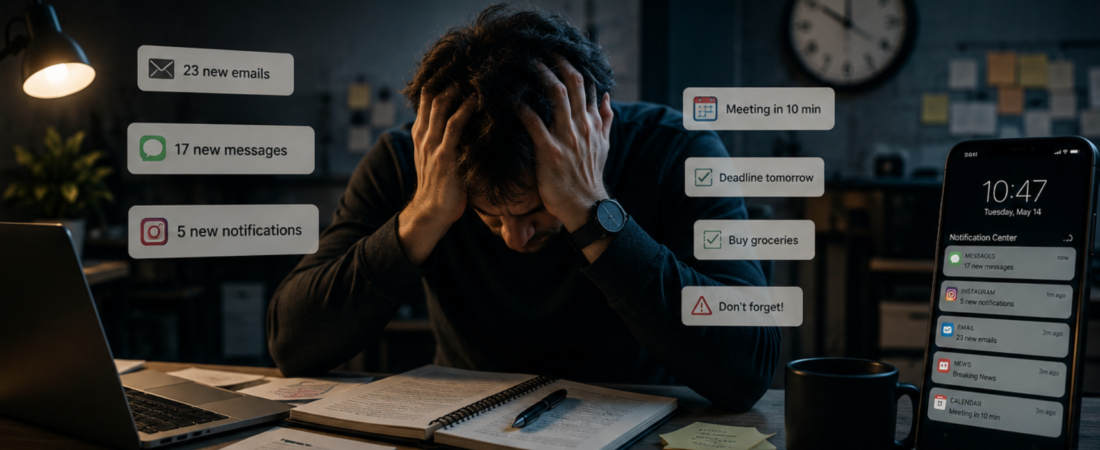
Why Modern Life Feels Mentally Exhausting
I think a lot of people today are mentally exhausted without even realizing how overloaded their brains actually are.
For a long time, I assumed stress and burnout mostly came from being busy. I thought the more responsibilities I had, the more mentally drained I would become. But over the years, I started noticing something interesting.
There were days where I was extremely busy and still felt mentally clear at the end of the day.
Vacations are actually a good example of this. You can wake up early, spend an entire day traveling, exploring, planning activities, walking constantly, and doing way more physically than you normally would during a workday, yet somehow still feel mentally refreshed at the end of it.
That made me realize something:
mental exhaustion is not always caused by the amount of things we do.
A lot of the time, it comes from how we process the constant stimulation, decisions, pressure, and information surrounding us every day.
Decision Fatigue Is Real
One thing that really changed my perspective was learning about decision fatigue.
After reading books like Blink by Malcolm Gladwell, Thinking, Fast and Slow by Daniel Kahneman, and The Paradox of Choice by Barry Schwartz, I started realizing how mentally exhausting constant decision-making actually is.
What stood out to me most from The Paradox of Choice was the idea that modern life gives us so many options, decisions, and constant stimulation that our brains quietly become overloaded without us realizing it. We assume more choices create more freedom, but too many choices can actually increase stress, anxiety, overthinking, and mental fatigue.
That idea honestly changed the way I approach my own life.
I started realizing that every small decision throughout the day slowly drains mental energy:
- emails,
- notifications,
- texts,
- meetings,
- social media,
- food choices,
- work problems,
- schedules,
- purchases,
- and distractions.
Most people never truly give their brains a break anymore.
And over time, all of that mental noise makes it harder to focus deeply on the things that actually matter.
“Learning to choose is hard. Learning to choose well is harder. And learning to choose well in a world of unlimited possibilities is harder still, perhaps too hard.”
— Barry Schwartz, The Paradox of Choice
What Mental Exhaustion Actually Feels Like
I can usually tell when I’ve reached my mental limit for the day because I stop functioning normally in simple situations that should basically be autopilot.
There have been times where I’ve forgotten which key unlocks my own front door. I’ve accidentally thrown away my shaker bottle instead of putting it in the dishwasher and then caught myself trying to put an apple core into the dishwasher instead.
Little things like that sound funny, but they usually happen when my brain is completely overloaded from constant stress, decisions, and mental stimulation.
There are also days where I sit in my truck after work in complete silence because my brain feels so mentally exhausted that it almost feels hard to process anything clearly anymore.
And honestly, I think a lot more people experience this than they realize.
A big part of reducing mental exhaustion is learning how discipline creates structure and consistency instead of relying on constant motivation. If you want to dive deeper into that idea, check out our article on why discipline beats motivation.
Burnout Is Not Always About Workload
One thing I misunderstood for years was where burnout actually comes from.
I used to think stress was purely caused by how much I had on my plate. But over time, I realized that was not fully true.
As my responsibilities increased over the years, I adapted.
What once felt overwhelming eventually became normal.
That made me realize burnout is not always about the amount of tasks you have. A lot of the time, burnout comes from how you mentally handle those situations.
Overthinking, constantly replaying problems, emotional decision-making, endless stimulation, and never mentally disconnecting are what really drain people.
I’ve personally become much better at making faster decisions and avoiding overanalyzing every small issue. The faster I learned to simplify decisions and focus on what actually mattered, the less mentally exhausted I felt overall.
Social Media and Overstimulation Are Making It Worse
I genuinely believe people today are massively overstimulated.
Social media, constant notifications, doom scrolling, short-form content, and nonstop information are completely destroying people’s ability to focus deeply.
I’ve struggled with this myself before too.
Your brain naturally craves the dopamine hits that come from constantly checking your phone or scrolling social media. But over time, it makes your attention span worse, increases anxiety, and leaves your brain feeling constantly scattered.
The problem is that overstimulation rarely feels productive.
It just feels mentally loud.
I think one of the biggest reasons people feel so mentally drained today is because their brains never truly get quiet anymore.
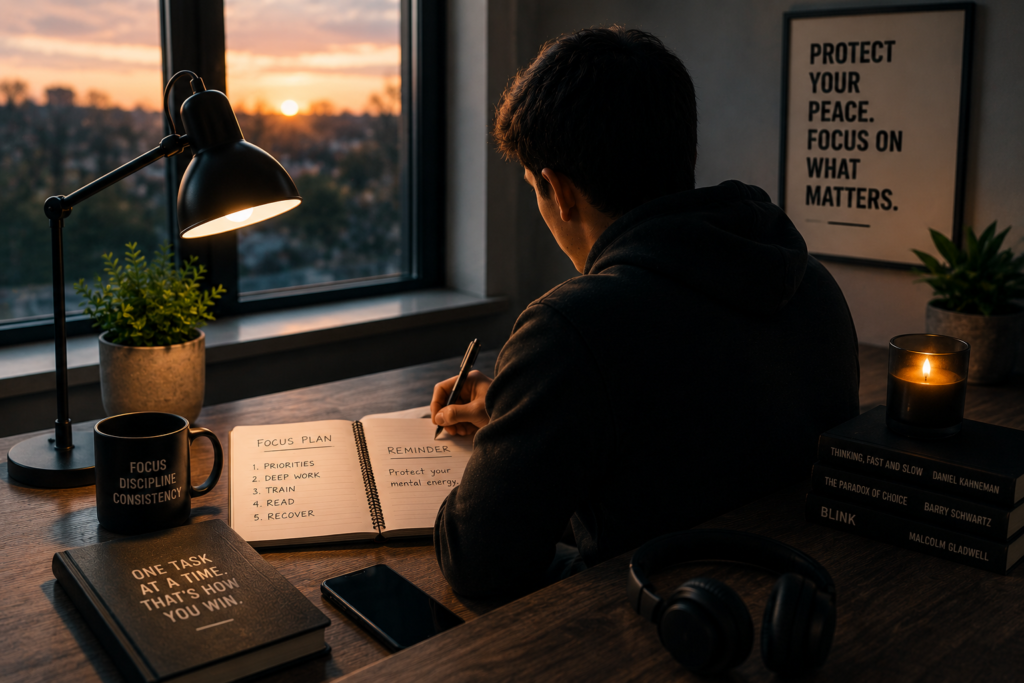
Focus Creates Calm
Some of my best mental days happen when I’m actually able to focus deeply on one task at a time.
When I silence my phone, hide notifications, stop multitasking, and fully focus on what I’m doing, I feel significantly calmer and more accomplished by the end of the day.
There’s something mentally exhausting about constantly having your attention pulled in multiple directions at once.
Focused attention feels different.
It creates clarity.
It creates calmness.
And honestly, I think people underestimate how mentally healthy it feels to simply slow down and focus completely on one thing at a time.
One phrase I always come back to is:
“Exhaust the body, ease the mind.”
No matter how mentally drained I get, physically pushing myself almost always helps me reset mentally.
A lot of people underestimate how much physical movement can improve mental clarity and reduce stress. If balancing fitness with a busy schedule feels impossible, check out our article on how to stay fit with a full-time job.
For me, that usually means:
- lifting heavy,
- intense cardio,
- pushing through physical discomfort,
- or challenging myself physically in some way.
I’ve realized that physically exhausting myself helps calm anxiety, clear my thoughts, and reduce stress much better than sitting around replaying problems in my head all night.
Ironically, the days where I least feel like training are often the days I need it the most.
There have been plenty of times where I gave in to the temptation of going home and doing absolutely nothing after stressful days. Whenever I do that, I usually notice the same thing:
my mental state is worse the next day.
But when I force myself to train instead, I usually bounce back more focused, calmer, and mentally stronger afterward.
Fitness became much bigger than appearance for me.
It became a form of stress management.
The Importance of Recovery
I also think people underestimate how important recovery is for mental health.
For me personally, sleep is probably the biggest factor.
I prioritize sleep over almost everything because I know how much it affects:
- focus,
- mood,
- stress,
- energy,
- productivity,
- and emotional stability.
I’ve also noticed that stepping away from screens helps me mentally reset a lot. I barely watch TV anymore, and instead I spend a lot more time reading at night because it calms my mind down before bed.
Music, meditation, silence, and simply disconnecting for a little while can honestly make a huge difference mentally.
I think people today are so overstimulated that they rarely give their brains time to actually recover.
Recommended Reading
- The Paradox of Choice — Barry Schwartz
- Thinking, Fast and Slow — Daniel Kahneman
- Blink — Malcolm Gladwell
Final Thoughts
Modern life constantly pulls our attention in different directions.
Notifications, social media, stress, endless decisions, information overload, and constant stimulation slowly drain people mentally without them even realizing it.
I think the solution is becoming more intentional about where your energy and attention go.
Simplify decisions.
Reduce distractions.
Focus deeply.
Protect your mental energy.
Take recovery seriously.
And when life starts feeling mentally overwhelming, sometimes the best thing you can do is challenge yourself physically instead of sitting in the stress.
A calm and focused mind is built intentionally.
It rarely happens by accident.