For a long time, I thought success came from constantly pushing harder.
I used to believe the people who achieved the most were simply willing to outwork everyone else by sleeping less, grinding longer, and never slowing down. If I wanted to improve my fitness, career, or goals, I assumed the answer was always more effort and more hours.
As I’ve gotten older, I’ve realized that mindset eventually starts working against you.
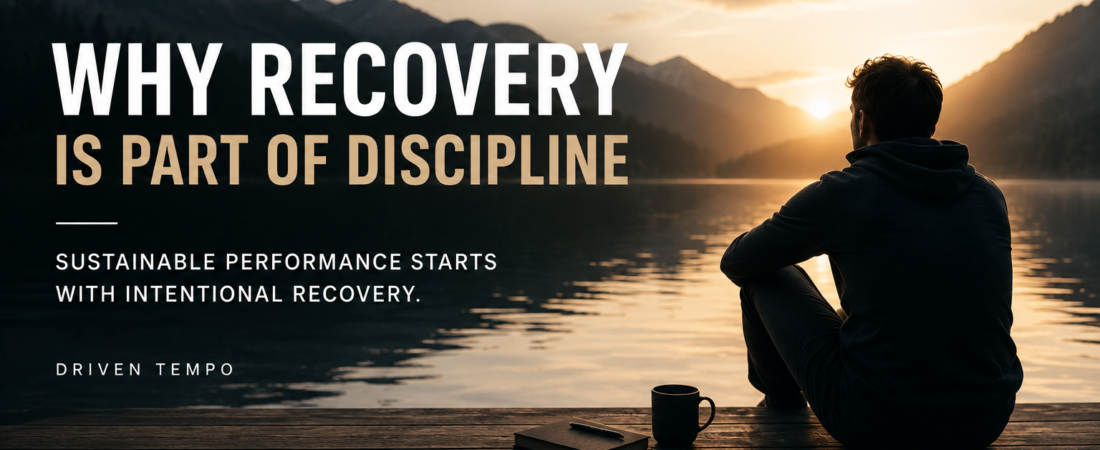
Recovery is not weakness.
Recovery is part of performance.
And honestly, I think a lot of people misunderstand what discipline actually looks like long term.
More Hours Does Not Always Mean Better Results
One of the biggest lessons I’ve learned over time is that productivity is not just about how many hours you put in.
It’s about the quality of the process.
When I was younger, I thought success meant constantly staying busy. I would sacrifice sleep, recovery, and mental rest because I believed pushing harder automatically meant making more progress.
But over time I started noticing something:
the more mentally and physically exhausted I became, the worse the quality of my work became too.
I could still force myself to work longer, but my:
- focus,
- decision-making,
- patience,
- creativity,
- and mental clarity
would slowly get worse.
Now I actually get more done in shorter periods of time because I prioritize recovery much more seriously than I used to.
That completely changed how I view discipline.
Recovery Is Different for Everyone
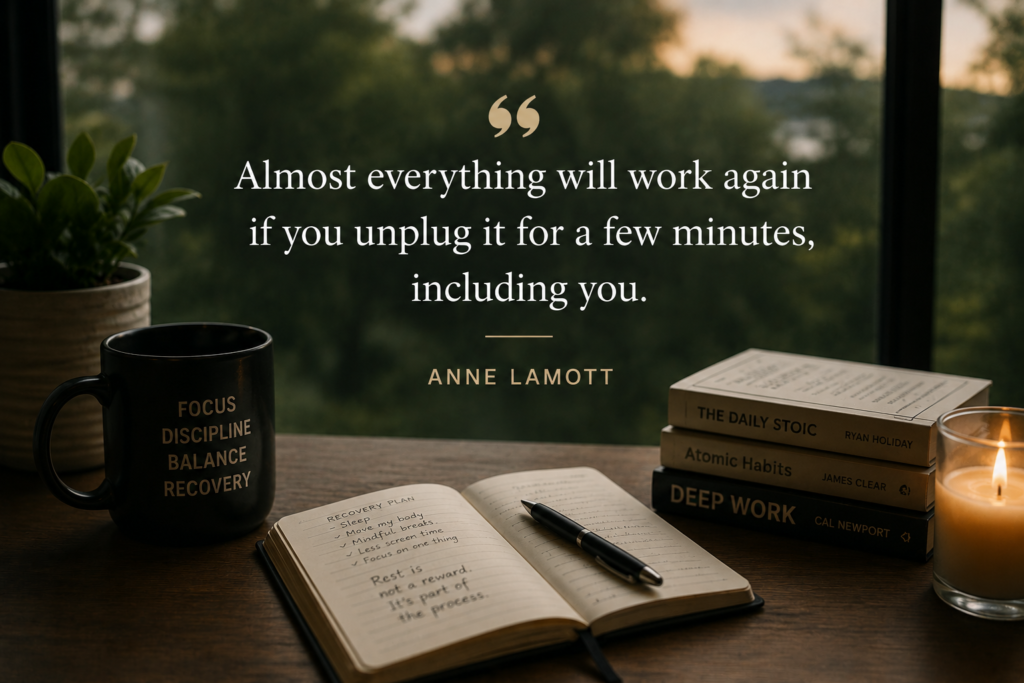
I think recovery looks different depending on the person.
For me personally, some of the biggest recovery tools are:
- reading,
- staying away from social media,
- sleep,
- focus music,
- active recovery like easy jogs,
- and stepping away from constant stimulation.
The gym is also a huge form of recovery for me mentally, even though it sounds contradictory.
Training hard helps me clear my mind and reset mentally. I’ve learned that as long as I prioritize sleep and nutrition properly, it’s actually very difficult for me to physically overtrain. Fitness became part of my structure and mental stability over time.
But recovery is not just physical.
Mental recovery matters just as much.
I think a lot of people today are mentally exhausted because their brains never truly disconnect from stimulation anymore.
Modern overstimulation, decision fatigue, and constant distractions are major reasons people feel mentally drained today. I talk more about that in my article on why modern life feels mentally exhausting.
Multitasking Is Bullcrap
One thing I’ve learned over time is that I know I’m properly recovered when I can focus deeply again.
To be honest, I think multitasking is mostly bullcrap.
The most successful and productive people are usually capable of focusing intensely on one thing at a time without constantly dividing their attention in every direction.
When I’m mentally recovered, I can sit down and focus completely on a single task without feeling mentally scattered or distracted. I feel calm, sharp, and capable of thinking critically.
But when I’m mentally exhausted, I notice the opposite happening.
I feel like I can’t think deeply anymore.
My attention gets fragmented.
Small distractions feel overwhelming.
Even basic tasks become mentally frustrating.
That’s usually the moment I realize I’ve pushed myself too far mentally without enough recovery.
The Guilt of Slowing Down
I’ve absolutely felt guilty for slowing down before.
There have been weeks where I was overloaded mentally and physically and felt like I was failing myself if I didn’t continue pushing harder. I used to believe resting meant falling behind.
Now I see it differently.
I’ve realized recovery actually improves the quality of everything else.
When I’m mentally clear and physically recovered:
- I make better decisions,
- I focus better,
- I handle stress better,
- I communicate better,
- and I perform better overall.
The goal is not to constantly run yourself into the ground.
The goal is sustainable performance over time.
The Worst Person to Lie To Is Yourself
One thing I used to say constantly was:
“I don’t have time to recover.”
Looking back, honestly, that was mostly bullshit.
I wasted plenty of time throughout the day doing things that added no value:
- endless scrolling,
- staying up late watching pointless TV,
- distractions,
- procrastination,
- and mentally overstimulating myself for no reason.
Ironically, now that I have far more responsibilities than I used to, I actually feel more intentional about protecting recovery time.
I think a lot of people are not truly lacking time.
They’re lacking structure and honesty with themselves.
The worst person to lie to is yourself.
Recovery does not always require huge amounts of time either. Sometimes recovery is:
- putting the phone away,
- reading for an hour,
- getting proper sleep,
- taking a walk,
- or simply disconnecting mentally for a while.
Small recovery habits make a huge difference over time.
Recovery Improves Discipline
One of the biggest things I’ve realized is that recovery actually strengthens discipline instead of weakening it.
When you’re constantly mentally exhausted, emotionally overloaded, and physically drained, everything becomes harder:
- focus,
- consistency,
- workouts,
- decision-making,
- stress management,
- and emotional control.
Recovery gives you the ability to keep showing up consistently long term.
A big part of long-term consistency is understanding why discipline matters more than temporary motivation. If you want to dive deeper into that mindset, check out our article on why discipline beats motivation.
That is what real discipline actually looks like.
Not temporary burnout.
Not nonstop grinding.
Not destroying yourself for short-term progress.
Real discipline is creating sustainable habits that allow you to continue growing without mentally collapsing in the process.
Final Thoughts
Modern life constantly pushes people toward overstimulation, burnout, and exhaustion.
A lot of people are physically present but mentally overloaded all the time.
I think recovery is one of the most overlooked parts of long-term success, mental health, and sustainable performance.
You do not become more disciplined by constantly ignoring your limits.
You become more disciplined by learning how to recover intentionally so you can continue performing at a high level long term.
Recovery is not weakness.
Recovery is preparation.
And sometimes the most productive thing you can do is slow down long enough to regain the focus, clarity, and energy needed to keep moving forward.